
solution
MOTOR CORE-INCLDING FAN COIL WINDING MACHINE
Automatic Stator Winding Machine|Auto Winding Machine Solutions
What Is an Automatic Winding Machine?
An automatic winding machine is an industrial machine used to wind wire, thread, or tape around a bobbin, mandrel, armature, coil, or stator core. By using programmable control, servo motors, wire tension control, and precise traversing movement, it helps manufacturers improve winding accuracy, production speed, and coil consistency. For motor manufacturing, a stator winding machine is specifically designed to wind conductive wire around the stator core of an electric motor or generator.
Teeming's Automatic Stator Winding Machine is equipped with an integrated cutting mechanism and offers an optional high-precision tensioner to optimize product quality. The machine is controlled by a PAC controller, which allows precise control over the winding process and seamless integration with automated production lines.
With advanced automation and high precision, Teeming's Automatic Stator Winding Machines help manufacturers improve production efficiency, reduce labor costs, and maintain consistent winding quality, making them an essential solution for modern motor manufacturing.
Learn more: What Is Winding Machines Used For?4 Available Features You Need to Know !
Automatic winding machine vs. Stator winding machine
| Item | Automatic winding machine | Stator winding machine |
| Main purpose | Winds wire, thread, or tape around bobbins, mandrels, coils, armatures, or stators | Winds conductive wire around stator cores for electric motors or generators |
| Typical products | Bobbin coils, relays, solenoids, sensors, transformers, ignition coils | Motor stators, generator stators, BLDC motor cores, fan motor cores |
| Key control factors | Wire gauge, winding speed, turn count, tension, layer spacing | Slot fill, wire placement, stator size, tension, winding path |
| Common automation features | Programmable controller, spindle motor, traversing shaft, tensioner | PAC control, tension control, cutting mechanism, customized tooling |
| Best fit | General coil and bobbin production | Motor core and stator productio |
Related Products-Automatic Stator Winding Machine|Auto Winding Machine Solutions
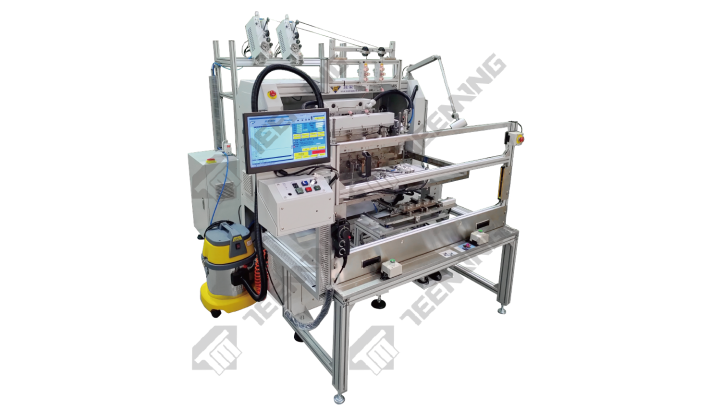
TM-1302_2 SPINDLE AUTO WINDING
Between 2 spindle pitch 130mm
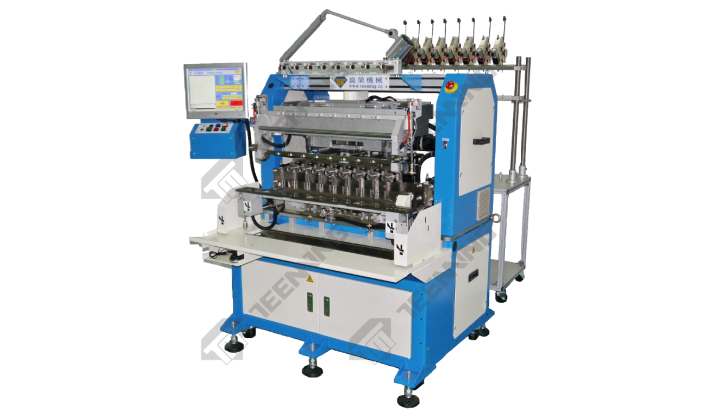
TM-1008_8 SPINDLE AUTO WINDING
Between 2 spindle pitch 100mm
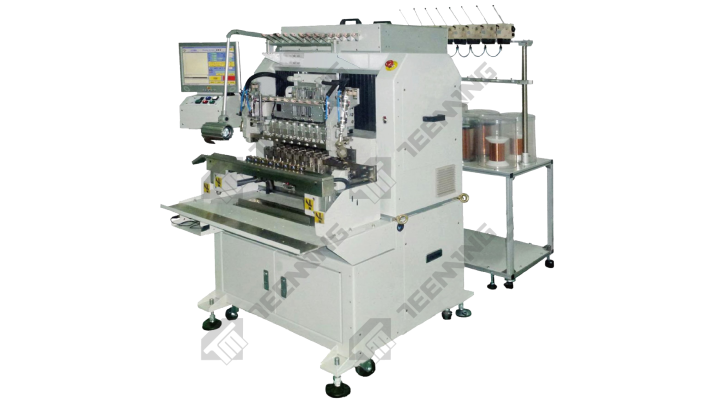
TM-5008_8 SPINDLE AUTO WINDING
Between 2 spindle pitch 50mm
How Does It Work?
An automatic stator winding machine works by loading the bobbin or stator tooling onto the spindle, setting winding parameters such as wire gauge, turn count, direction, tension, and winding path, and then using a programmable controller to guide the wire during winding. The tensioner helps maintain stable wire tension, while the cutting mechanism and optional automation modules can support more efficient loading, unloading, and production line integration.
Key Components
| Component | Function | Why it matters |
| Spindle motor | Rotates the bobbin, tooling, or stator during winding | Affects winding speed and production stability |
| Programmable controller | Stores and controls winding parameters | Helps manage turn count, direction, speed, and repeatability |
| Wire tensioner | Maintains stable wire tension | Reduces loose winding, wire breakage, and inconsistent coils |
| Traversing system | Guides wire movement during winding | Supports even wire placement and layer consistency |
| Cutting mechanism | Cuts wire after the winding process | Improves process efficiency and reduces manual work |
| Customized jig / tooling | Holds different product shapes and sizes | Supports mixed product production and fast changeover |
Process - Automatic Stator Winding Machine
1. Load the bobbin onto the spindle of the automatic stator winding machine. Secure the bobbin in place to prevent any movement during the winding process. The tooling serves as the foundation for the wire coils.
2.Start the automatic stator winding machine to initiate the winding process. The stator winding machine will rotate the bobbin and guide the wire onto it according to the specified parameters.
3.End winding, once the desired number of turns or layers is reached, secure the ending end of the wire to the bobbin.
4.Carefully remove the fully wound bobbin from the spindle. Take care to avoid any damage to the wound coils during the unloading process.
Product type&Application
| Product type | Application | Teeming relevance |
| Stator cores | Electric motors, generators, fan motors | Main solution focus of this page |
| BLDC motor stators | Drones, e-bikes, industrial automation | Common use case for precision stator winding |
| Fan motor stators | HVAC, cooling fans, home appliances | Typical high-volume winding application |
This solution focuses on stator winding machine. For other coil types, see Ignition Coil Winding, Toroidal Winding, or Transformer Winding.
FAQs about Automatic Stator Winding Machine
Q1. What is an automatic stator winding machine?
Q2. What is the difference between an automatic winding machine and a stator winding machine?
Q3. What are the advantages of using an automatic stator winding machine?
Q4. How does an automatic stator winding machine improve production efficiency?
It reduces manual operation, controls winding parameters such as turn count and wire tension, improves repeatability, and helps manufacturers produce stator coils with more consistent quality.
Q5. Why is wire tension control important in stator winding?
Stable wire tension helps prevent wire breakage, loose winding, uneven layers, and inconsistent electrical performance, which can directly affect motor efficiency and reliability.
Q6. What features should I look for when choosing an automatic stator winding machine?
Key features include programmable winding settings, adjustable tension control, tooling flexibility, stable wire placement, cutting mechanisms, user-friendly operation, and production line integration options.
Q7. What other coil types can an automatic winding machine be configured to produce?
Automatic winding machines can be configured for bobbin coils, solenoid coils, ignition coils, transformer coils, and other coil products. This solution page focuses on stator core winding for motors and generators; for other coil types, see Teeming's Ignition Coil Winding and Toroidal Winding solutions.
Q8. Can Teeming provide customized stator winding machine solutions?
Yes. Teeming can support customized tooling, PAC control, tension control, integrated cutting mechanisms, loading and unloading options, and automated production line integration for different stator winding requirements.